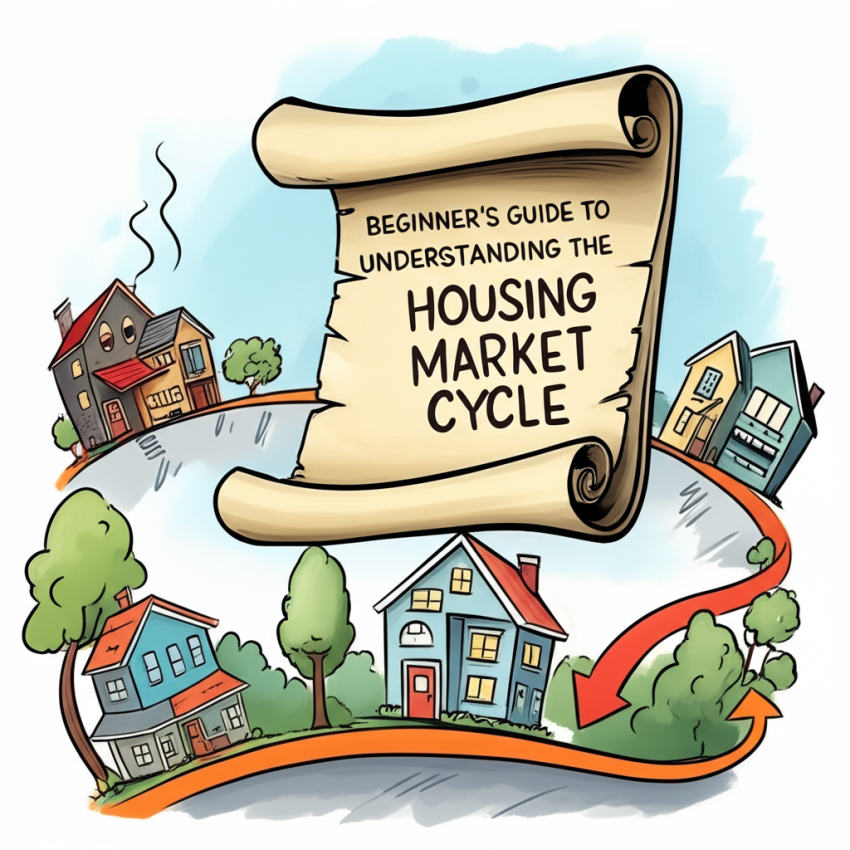
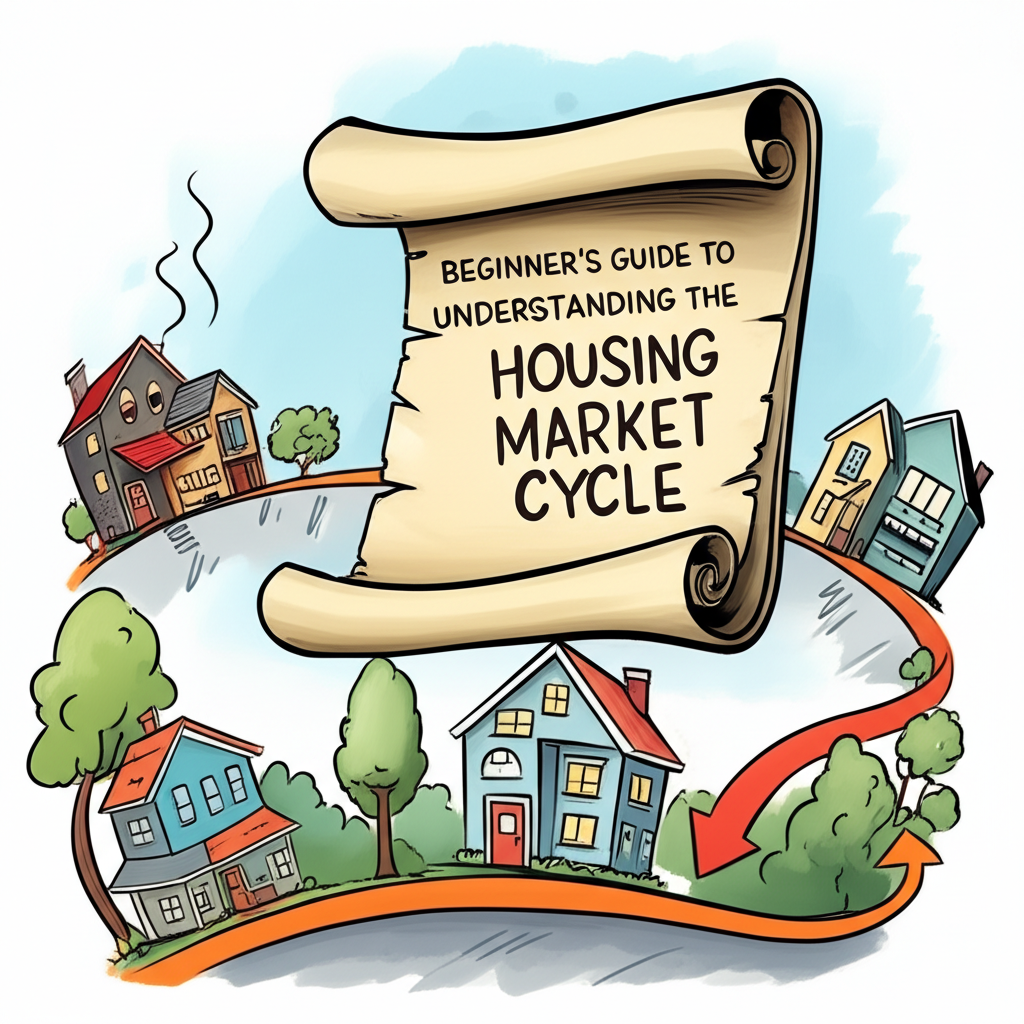
The Beginner’s Guide to Understanding the Housing Market Cycle: Navigating Real Estate’s Ups and Downs
Introduction: Why Understanding the Housing Market Cycle Matters
Have you ever wondered why real estate prices seem to go up and down like a rollercoaster? Or why sometimes homes sell in days with multiple offers, while at other times they sit on the market for months? This isn’t random; it’s the housing market cycle in action. Just like the seasons, the real estate market experiences predictable (though not always perfectly timed) phases of growth, peak, decline, and recovery.
For anyone looking to buy, sell, or invest in real estate, or even just understand the economy better, grasping these cycles is fundamental. It empowers you to make informed decisions, avoid common pitfalls, and potentially save or make significant money. This beginner’s guide will demystify the housing market cycle, breaking down its phases, the key factors that influence it, and practical tips for navigating its complexities.
What Exactly is the Housing Market Cycle?
The housing market cycle refers to the natural, long-term fluctuations in real estate activity, including home prices, sales volumes, and new construction. It’s driven by a complex interplay of economic, social, and demographic forces. Unlike a stock market that can swing wildly day-to-day, the housing market typically moves in broader, slower trends over several years.
It’s crucial to understand that these cycles are not uniform across all regions. A booming market in one city might coincide with a stagnant or declining market in another, due to local economic conditions, population shifts, and housing supply. However, the underlying principles of the four main phases remain consistent.
The Four Seasons of Real Estate: Phases of the Housing Market Cycle
Think of the housing market cycle like the four seasons. Each has distinct characteristics, and while we know what generally comes next, the exact timing and intensity can vary.
1. Recovery / Expansion (Spring)
This phase marks the beginning of an upturn after a period of decline. It’s often characterized by:
- Low Prices: Home values have bottomed out and are starting to slowly increase.
- Increased Sales Volume: More buyers, often first-time homeowners or investors, enter the market, drawn by affordability.
- Growing Confidence: Lenders become more willing to lend, and consumers feel more secure about their jobs and financial futures.
- Reduced Inventory: Homes that were sitting on the market during the slump start to sell, and new construction remains low but begins to pick up.
In this phase, it feels like the market is "waking up." Buyers often find good deals, and competition is still relatively low.
2. Peak / Boom (Summer)
The peak or boom phase is when the market is at its hottest, and optimism is high.
- High Prices: Home values are appreciating rapidly, sometimes reaching unsustainable levels.
- Bidding Wars: Demand often outstrips supply, leading to multiple offers and homes selling above asking price.
- Speculative Buying: Investors might buy properties solely for quick resale, hoping to profit from rapid appreciation.
- Increased New Construction: Developers rush to build new homes to meet demand, sometimes leading to oversupply.
- Tight Credit: As prices soar, affordability becomes a concern, and lending standards might tighten slightly to curb excessive risk.
This phase is characterized by intense activity and a feeling that "everyone is making money." However, it’s also when the market is most vulnerable to a correction.
3. Contraction / Correction (Autumn)
Following the peak, the market begins to cool down. This phase can be a gradual slowdown or a more abrupt correction, depending on the underlying causes.
- Slowing Sales: Buyer demand starts to wane, often due to high prices, rising interest rates, or economic uncertainty.
- Price Declines: Home values begin to stagnate or fall as sellers reduce prices to attract buyers.
- Increased Inventory: Homes take longer to sell, and the number of available properties on the market grows.
- Reduced Confidence: Buyers become more hesitant, fearing they might purchase at the top of the market.
- Fewer New Constructions: Developers scale back projects as demand lessens.
This phase feels like the market is "catching its breath." For sellers, it becomes more challenging to get their desired price, and buyers gain more negotiating power.
4. Trough / Slump (Winter)
The trough or slump is the bottom of the cycle, characterized by low activity and widespread pessimism.
- Low Prices: Home values are at their lowest point in the cycle, though they may still be above the previous cycle’s trough.
- Low Sales Volume: Few buyers are active, and those who are can find significant bargains.
- High Inventory: Many homes sit on the market, sometimes leading to foreclosures or short sales.
- Negative Sentiment: Media reports often focus on the "housing crisis" or "market crash," contributing to a lack of confidence.
- Tight Credit: Lenders are very cautious, making it harder to get mortgages.
While this phase can be challenging for current homeowners, it often presents excellent long-term opportunities for patient buyers and investors looking to acquire assets at a discount.
Key Factors Influencing the Housing Market Cycle
Understanding the "why" behind these shifts is crucial. Several powerful forces drive the housing market cycle:
1. Interest Rates
This is arguably one of the most significant drivers. Lower interest rates make mortgages more affordable, increasing purchasing power and stimulating demand. Conversely, higher rates reduce affordability, cool demand, and can lead to price declines. Central banks (like the Federal Reserve in the U.S.) use interest rates as a tool to manage inflation and economic growth, directly impacting the housing market.
2. Economic Growth & Employment
A strong economy with low unemployment means people have stable jobs, higher incomes, and more confidence to purchase homes. When the economy falters, job losses and financial insecurity lead to reduced demand for housing and increased defaults. A robust job market is a powerful propellant for housing demand.
3. Supply and Demand (Inventory Levels)
The fundamental economic principle of supply and demand applies directly to housing.
- Low Supply & High Demand: Leads to rising prices and seller’s markets. This often happens during recovery and peak phases.
- High Supply & Low Demand: Leads to falling prices and buyer’s markets. This is typical of contraction and trough phases.
New construction, existing home sales, and population shifts all contribute to the balance of supply and demand.
4. Population Growth & Demographics
Long-term trends in population growth, household formation, and demographic shifts (e.g., millennials entering their prime home-buying years, aging baby boomers downsizing) significantly influence housing demand over decades. A growing population generally requires more housing units.
5. Government Policies & Regulations
Government actions can profoundly impact the housing market:
- Monetary Policy: Interest rate decisions by central banks.
- Fiscal Policy: Tax credits for homebuyers, housing subsidies, or changes to property taxes.
- Lending Regulations: Rules around mortgage qualifications (e.g., down payment requirements, debt-to-income ratios) directly affect who can buy a home.
- Zoning Laws & Building Permits: These influence the supply of new housing.
6. Consumer Confidence
Psychology plays a huge role. When consumers feel optimistic about the future, their personal finances, and the economy, they are more likely to make large purchases like a home. Conversely, fear and uncertainty can cause potential buyers to delay decisions, even if economic fundamentals are strong.
7. Inflation
Rising inflation can increase the cost of building materials and labor, making new construction more expensive. It can also lead central banks to raise interest rates to cool the economy, impacting mortgage affordability. On the flip side, real estate can sometimes be seen as a hedge against inflation, as property values and rents may rise with general price levels.
Why Understanding the Cycle Matters for You
- For Buyers: Knowing the phase can help you determine if it’s a good time to buy (e.g., during recovery or trough for better deals) or if you might face stiff competition and inflated prices (during a boom). It also helps manage expectations about future home value appreciation.
- For Sellers: Understanding the cycle can inform your pricing strategy and when to list your home. Selling during a peak can maximize profits, but requires careful timing.
- For Investors: Cycles present opportunities. Buying during a trough or early recovery and selling during a peak can yield significant returns. It also helps in assessing rental market trends.
- For Renters: The housing market cycle can indirectly affect rental prices. During a boom, some people are priced out of buying, increasing demand for rentals. During a slump, if homeownership becomes more accessible, rental demand might ease.
Navigating the Housing Market Cycle: Practical Tips for Beginners
While predicting the exact timing of market shifts is impossible, here’s how to use your newfound knowledge:
- Do Your Research (Local is Key): The national housing market is an aggregate. Focus on the economic indicators, job growth, population trends, and inventory levels in your specific city or neighborhood. Local real estate agents can be a great resource.
- Be Patient and Don’t Rush: Avoid making impulsive decisions based on market hype or panic. A home is a long-term investment.
- Focus on Long-Term Goals: Unless you’re a professional real estate flipper, don’t try to perfectly time the market. Buy a home that meets your needs, in an area you like, and plan to hold onto it for several years. Over the long term, real estate generally appreciates.
- Don’t Panic During Downturns: Market corrections are natural. If you’re financially stable and not planning to sell immediately, a downturn often just means your home’s paper value has temporarily decreased.
- Consult Professionals: Work with experienced real estate agents, mortgage brokers, and financial advisors who can provide personalized guidance based on your situation and local market conditions.
- Maintain Financial Health: Regardless of the market phase, having a stable income, a good credit score, and an emergency fund will put you in a strong position to buy, sell, or simply weather any economic storms.
Frequently Asked Questions (FAQs) About the Housing Market Cycle
Q1: Is the housing market cycle perfectly predictable?
A: No. While patterns exist and phases generally follow one another, the exact timing, duration, and intensity of each phase are influenced by countless variables and cannot be predicted with certainty. External shocks (like global pandemics or financial crises) can also disrupt typical patterns.
Q2: How long does a typical housing market cycle last?
A: There’s no fixed duration. Historically, a full cycle (from trough to trough or peak to peak) can last anywhere from 7 to 18 years, with many cycles falling in the 10-year range. However, this is just an average, and specific local cycles can be shorter or longer.
Q3: Is the cycle the same everywhere in the country?
A: Absolutely not. While national trends provide a broad overview, local housing markets are highly influenced by specific economic drivers (e.g., a major employer moving in or out), local supply/demand dynamics, and regional demographics. A city heavily reliant on one industry might experience a different cycle than a diverse metropolitan area.
Q4: Should I wait for the "perfect" time to buy or sell?
A: Trying to time the market perfectly is extremely difficult, even for experts. For most individuals, focusing on your personal financial situation, housing needs, and long-term goals is more important than trying to hit the exact bottom or top of the market. "Time in the market" often beats "timing the market."
Conclusion: Empowering Your Real Estate Journey
Understanding the housing market cycle transforms real estate from a mysterious, unpredictable force into a comprehensible system with discernible patterns. By recognizing the different phases and the factors that influence them, you equip yourself with the knowledge to make more strategic decisions, whether you’re a first-time homebuyer, a seasoned investor, or simply curious about the economy.
Remember, real estate is a long-term game. While cycles bring their ups and downs, a well-informed approach, combined with sound financial planning, can help you navigate the housing market with confidence and achieve your property goals. The journey of understanding begins now!