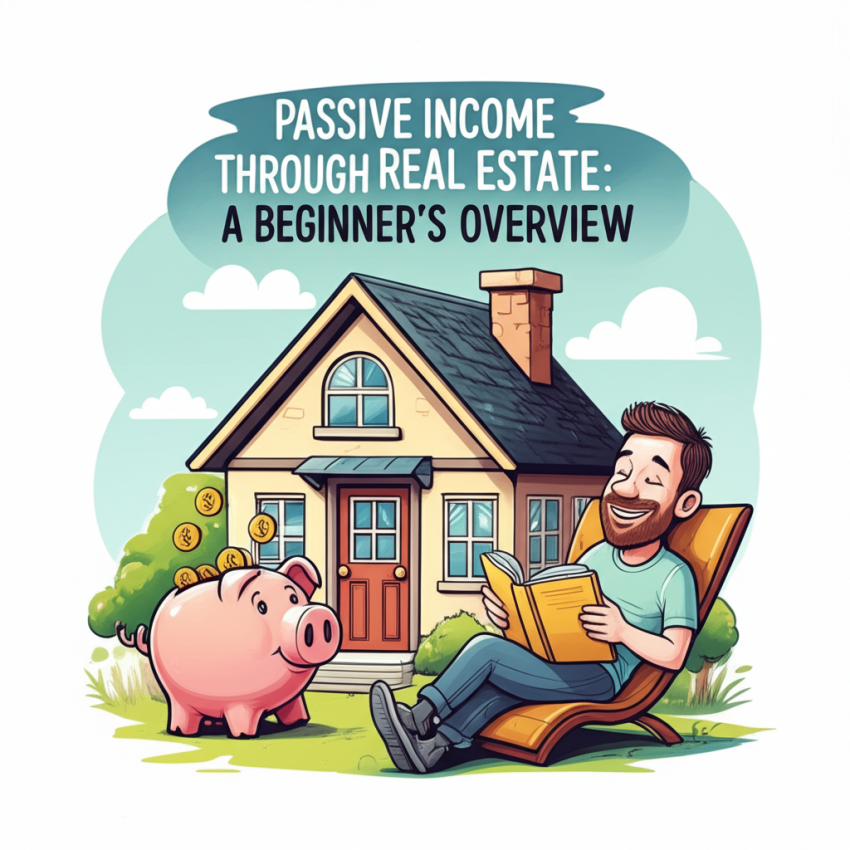
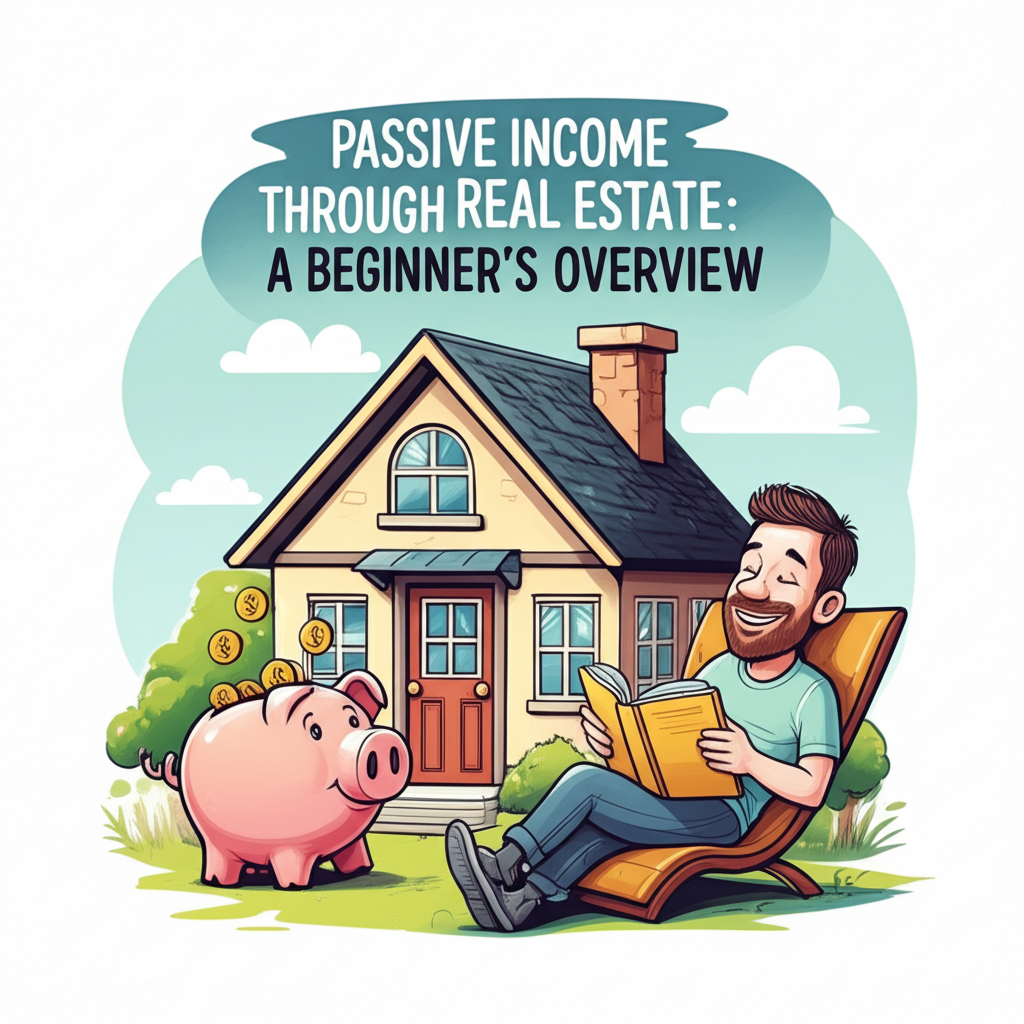
Passive Income Through Real Estate: A Beginner’s Overview
The dream of financial freedom, where your money works for you instead of the other way around, is a powerful motivator for many. Among the various paths to achieving this, generating passive income stands out as a highly sought-after goal. And when it comes to reliable, wealth-building assets, real estate consistently ranks at the top. For beginners, the world of real estate can seem daunting, filled with jargon and complex transactions. However, with the right understanding and approach, real estate can become a cornerstone of your passive income strategy.
This comprehensive guide will demystify passive income through real estate, providing a beginner-friendly overview of its potential, popular avenues, and crucial considerations to help you embark on your journey towards financial independence.
Understanding Passive Income in Real Estate
Before diving into the specifics, let’s clarify what "passive income" truly means in the context of real estate. Unlike a traditional job where you exchange time for money, passive income is earnings derived from an enterprise in which you are not actively involved. For real estate, this typically means:
- Initial Effort: There’s usually a significant upfront effort – researching, acquiring, setting up, or investing.
- Ongoing Management (Minimal): Once set up, the income stream requires minimal ongoing work. This might involve hiring a property manager for rentals, or simply holding shares in a Real Estate Investment Trust (REIT).
- Consistent Returns: The goal is a steady flow of income, often monthly or quarterly, with less direct intervention from your side.
It’s important to distinguish this from "active" real estate strategies like house flipping or wholesaling, which often require substantial time, effort, and direct involvement to generate profit. While lucrative, these are not truly passive.
Why Choose Real Estate for Passive Income?
Real estate has been a favored investment vehicle for generations, and for good reason. Its appeal for passive income generation stems from several inherent advantages:
- Tangible Asset: Unlike stocks or digital currencies, real estate is a physical asset you can see and touch. This tangibility offers a sense of security and stability.
- Inflation Hedge: Real estate values and rental income often rise with inflation, protecting your purchasing power over time. As the cost of living increases, so too does the income your properties generate.
- Appreciation Potential: Over the long term, real estate typically appreciates in value. This means not only do you generate passive income from rents, but the asset itself grows, increasing your net worth.
- Tax Advantages: Real estate investors can benefit from various tax deductions, including depreciation, mortgage interest, property taxes, and operating expenses, which can significantly reduce your taxable income. (Always consult a tax professional for personalized advice).
- Leverage: One of the most unique aspects of real estate is the ability to use leverage. You can control a high-value asset with a relatively small down payment, amplifying your potential returns.
Popular Avenues for Real Estate Passive Income (Beginner-Friendly)
The beauty of real estate investing is its versatility. There are several entry points, each with varying levels of capital requirements, involvement, and risk. Here are some of the most popular and beginner-friendly options for generating passive income:
1. Rental Properties (The Classic Method)
This is perhaps the most iconic form of real estate passive income. It involves purchasing a property (residential or commercial) and renting it out to tenants, collecting consistent monthly income.
- Residential Properties: This includes single-family homes, duplexes, triplexes, or small apartment buildings.
- Pros: Steady cash flow, potential for significant appreciation, control over your asset, and tax benefits.
- Cons: Requires a larger upfront investment, potential for tenant issues (vacancies, late payments, damage), ongoing maintenance responsibilities, and time commitment (unless you hire a property manager).
- Commercial Properties: While generally requiring more capital, commercial properties (offices, retail spaces, industrial units) can offer longer lease terms and potentially higher returns.
- Tips for Beginners: Start small, perhaps with a single-family home. Consider hiring a reputable property management company to handle tenant screening, rent collection, and maintenance, making the income truly passive.
2. Real Estate Investment Trusts (REITs)
If the idea of direct property ownership feels too overwhelming, REITs offer a fantastic alternative. A REIT is a company that owns, operates, or finances income-producing real estate. They are often publicly traded, meaning you can buy shares in a REIT just like you would buy shares in any other company.
- How it Works: REITs own a portfolio of properties (e.g., apartments, shopping malls, hotels, data centers). They generate income from rents and are legally required to distribute at least 90% of their taxable income to shareholders annually in the form of dividends.
- Pros: High liquidity (easy to buy and sell shares), diversification (you’re invested in many properties), low entry barrier (can buy shares with small amounts), no management responsibilities, and consistent dividend income.
- Cons: Subject to stock market volatility, no direct control over the underlying properties, and dividends are taxed as ordinary income (unless held in a tax-advantaged account).
3. Real Estate Crowdfunding
Real estate crowdfunding platforms allow multiple investors to pool their money to collectively invest in larger real estate projects that would otherwise be inaccessible to individual investors. This can include anything from residential developments to commercial acquisitions.
- How it Works: You invest a certain amount of capital into a specific project listed on a crowdfunding platform. In return, you receive a share of the profits, which can come from rental income, interest payments, or a share of the profits when the property is sold.
- Pros: Lower entry barrier (some platforms allow investments as low as $500-$1,000), access to larger and more diverse projects, passive involvement, and professional management of the underlying asset.
- Cons: Investments are often illiquid (money locked for several years), platform fees, and returns are dependent on the success of the specific project and the expertise of the project sponsor.
4. House Hacking
This creative strategy is particularly popular among first-time homebuyers looking to enter the real estate market with minimal personal living expenses. House hacking involves buying a multi-unit property (like a duplex, triplex, or quadplex) and living in one unit while renting out the others.
- How it Works: The rental income from the other units can significantly offset, or even completely cover, your mortgage payments and other living expenses.
- Pros: Drastically reduces your personal housing costs, allows you to acquire an income-producing asset with a low down payment (e.g., FHA loans for owner-occupied properties), provides hands-on learning about property management, and offers a clear path to building equity and wealth.
- Cons: Less privacy than a single-family home, direct interaction with tenants, and you are responsible for the entire property.
Less Passive (But Worth Knowing) Options
While not strictly passive, it’s worth briefly mentioning other real estate strategies that are often discussed but require more active involvement:
- House Flipping: Buying a property, renovating it, and selling it quickly for a profit. This is highly active and requires significant time and expertise.
- Wholesaling: Finding distressed properties, putting them under contract, and then assigning that contract to another investor for a fee. This is a sales-driven business, not passive.
Key Considerations Before You Start
Embarking on your passive income real estate journey requires careful planning and due diligence. Here are some crucial considerations for beginners:
1. Education is Paramount
Before investing a single dollar, educate yourself. Read books, listen to podcasts, attend webinars, and connect with experienced investors. Understand market cycles, property analysis, financing options, and legal aspects. Knowledge is your most powerful asset.
2. Define Your Goals
What do you want to achieve? Are you looking for steady monthly cash flow, long-term appreciation, or a combination? Your goals will dictate the best strategy and property type for you.
3. Financial Preparedness
Assess your financial situation honestly. How much capital do you have for a down payment, closing costs, and a reserve fund for unexpected expenses? Understand debt-to-income ratios and get pre-approved for financing if pursuing direct ownership.
4. Risk Assessment
Every investment carries risk. Real estate is no exception. Understand potential downsides like market downturns, vacancies, unexpected repairs, and economic shifts. Develop a contingency plan.
5. Location, Location, Location
This age-old real estate mantra holds true. Research potential markets thoroughly. Look for areas with strong job growth, increasing populations, good schools, low crime rates, and desirable amenities. These factors drive demand and property values.
6. Build Your Team
You don’t have to do it alone. Assemble a reliable team: a knowledgeable real estate agent, a trusted lender, a competent property manager (if going for rentals), a good contractor, and a tax advisor/accountant.
Navigating the Challenges
Even "passive" income streams require some attention. Be prepared for:
- Market Fluctuations: Real estate markets can go up and down. Long-term thinking is key.
- Tenant Management (for Rentals): Even with a property manager, some issues may require your input. Thorough tenant screening is vital.
- Unexpected Costs: Furnaces break, roofs leak. Always have a reserve fund for repairs and maintenance.
- Time Commitment: While less than active strategies, even REITs require monitoring. Direct ownership will always demand some time for oversight, especially initially.
The Path to Financial Freedom
Real estate offers a proven, tangible path to building wealth and generating passive income. It’s not a get-rich-quick scheme, but rather a get-rich-slow strategy that rewards patience, smart decisions, and consistent effort. For beginners, starting with thorough education, setting clear goals, and choosing the right entry point – whether it’s a house hack, a few shares of a REIT, or a modest rental property – can lay a solid foundation for a future of financial freedom.
FAQs (Frequently Asked Questions)
Q1: Is real estate passive income truly "passive"?
A1: It depends on the strategy. REITs are highly passive. Rental properties can be passive if you hire a good property manager, but will require more initial effort and occasional oversight. Nothing is 100% passive, but some options require significantly less active management than others.
Q2: How much money do I need to start investing in real estate?
A2: It varies greatly. You can start with as little as a few hundred dollars by buying REIT shares. Real estate crowdfunding platforms might require $500-$5,000. For direct ownership of a rental property, you’ll need a down payment (typically 3.5% to 25% of the property value) plus closing costs and a reserve fund, which could be tens of thousands of dollars.
Q3: What’s the biggest risk for beginners in real estate?
A3: The biggest risk is often a lack of education and proper due diligence. Buying the wrong property in the wrong location, overpaying, underestimating expenses, or not properly vetting tenants can lead to significant financial losses. Always do your homework.
Q4: Should I use a property manager for my rental property?
A4: For beginners, or those seeking truly passive income from rentals, a property manager is highly recommended. They handle tenant screening, rent collection, maintenance, and emergencies, freeing up your time. While they charge a fee (typically 8-12% of gross rents), the peace of mind and time savings often justify the cost.